What should you look for before considering the choices?
Start with three concrete observations: how many people you see, what they are doing, and where the main objects are. Do not invent a story around the setting. A suitcase near a counter proves neither that someone is about to leave nor that they are checking in at an airport. Separating observation from interpretation prevents you from choosing a sentence just because it sounds plausible.
Think of simple verbs before looking for details: carry, push, place, examine, water. For a scene with no people, consider positions such as beside, against, above, and between. This preparation gives you a few possible meanings to listen for; it does not mean predicting the correct sentence word for word.
In a storage scene, putting a towel on a shelf and folding a towel are different actions. Seeing the right object does not make an incorrect verb correct. Conversely, “document” can describe a plan even if it does not use the exact name of the object.
How should you work through this set?
These six exercises also appear in our 200-question bank. If you have already worked through them here, the bank will not be an unfamiliar assessment.
For each scene, first justify your choice with an observable detail. Then read the explanation and say why the other three options are incorrect. If you consult the image’s accessible text description, you are practicing how two descriptions correspond, not visual recognition alone.
A transcript does not measure your ability to recognize a sentence you hear. Separate your success with meaning from your listening performance. For an official audio example, see the ETS Global page listed in the sources, which includes an audio file.
Photo 1
Look at the image, then play the audio. The alt text describes the scene for accessibility; reading it changes the nature of this visual exercise.

Read the transcript
A: Number 1. A: A. A worker is folding a ladder. A: B. A person is putting towels on a shelf. A: C. A basket is filled with fruit. A: D. Some curtains are being opened.
Which statement best describes the illustration?
Choose an answer.
The solution, step by step
B — A person is putting towels on a shelf.
The method in action
- The only action shown is putting the towels away. There is no ladder, fruit, or curtain in the scene.
Photo 2
Look at the image, then play the audio. The alt text describes the scene for accessibility; reading it changes the nature of this visual exercise.

Read the transcript
A: Number 2. A: A. The chairs are being stacked. A: B. A cup is being washed. A: C. Two people are looking at a laptop. A: D. The screen is being carried outside.
Which statement best describes the illustration?
Choose an answer.
The solution, step by step
C — Two people are looking at a laptop.
The method in action
- The people are looking at the screen. The chairs and cup are present, but no one is stacking or washing them.
Photo 3
Look at the image, then play the audio. The alt text describes the scene for accessibility; reading it changes the nature of this visual exercise.
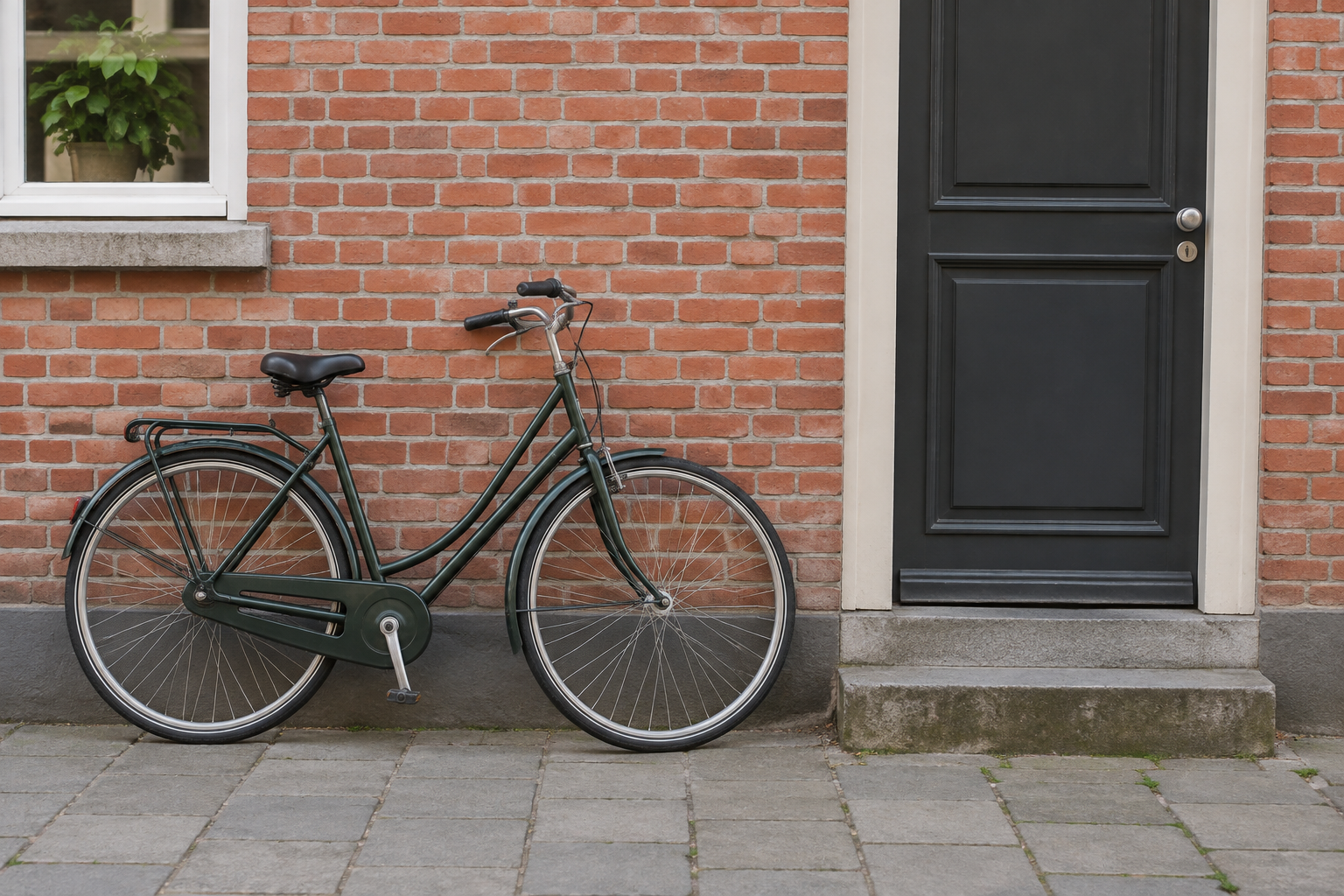
Read the transcript
A: Number 3. A: A. A bicycle is leaning against a wall. A: B. Someone is repairing a wheel. A: C. A door is being painted. A: D. Several bicycles are moving along a road.
Which statement best describes the illustration?
Choose an answer.
The solution, step by step
A — A bicycle is leaning against a wall.
The method in action
- The bicycle’s position is visible; no one is repairing or painting anything, and only one bicycle is present and stationary.
Photo 4
Look at the image, then play the audio. The alt text describes the scene for accessibility; reading it changes the nature of this visual exercise.

Read the transcript
A: Number 4. A: A. The plants are being removed from their pots. A: B. The bench is being assembled. A: C. A person is picking flowers. A: D. A person is watering some plants.
Which statement best describes the illustration?
Choose an answer.
The solution, step by step
D — A person is watering some plants.
The method in action
- The watering can is pouring water onto the plants. The other answers replace the action shown with a different one.
Photo 5
Look at the image, then play the audio. The alt text describes the scene for accessibility; reading it changes the nature of this visual exercise.

Read the transcript
A: Number 5. A: A. The luggage is beside a counter. A: B. Passengers are boarding a plane. A: C. A clerk is opening a suitcase. A: D. The bags are hanging from the ceiling.
Which statement best describes the illustration?
Choose an answer.
The solution, step by step
A — The luggage is beside a counter.
The method in action
- You can state where the suitcases are, but you cannot invent passengers or an employee who is not in the scene.
Photo 6
Look at the image, then play the audio. The alt text describes the scene for accessibility; reading it changes the nature of this visual exercise.

Read the transcript
A: Number 6. A: A. The boxes are being placed on the floor. A: B. A worker is pushing a cart. A: C. The shelves are being taken apart. A: D. A worker is sealing an envelope.
Which statement best describes the illustration?
Choose an answer.
The solution, step by step
B — A worker is pushing a cart.
The method in action
- The visible action is pushing the cart. The shelves are part of the setting; no one is taking them apart or unloading anything.
The pitfall
Recognizing a noun but missing what happens to it
A distractor may name the right cart but say it is being repaired when someone is actually pushing it. Review your reasoning: if it only says “there is a cart,” you have not checked the verb. A complete sentence describes a complete relationship.
Pay the same attention to the passive voice: “is being painted” describes an action in progress. A wall that has already been painted does not make the sentence true. Look for a visible action, tool, or other clue before choosing that interpretation.
What should you write down after a mistake?
Keep the word or phrase that caused your mistake, then write one correct and one incorrect sentence about the same scene. For example, “the bicycle is leaning against the wall” describes a position; “someone is repairing the bicycle” invents a person. This contrast is more useful than copying only the answer letter.
Then revisit the scene and explain the difference out loud. If you know the answer but cannot say why the other choices are wrong, return to your observations. Speed comes after accuracy.
Key takeaways
- An option must be true as a whole.
- Separate visible actions from imagined scenarios.
- Getting a transcript question right is not the same as succeeding at listening.